Can you hear sounds in Space?
Discovery’s theme during the last School Holidays was everything to do with the science of SOUND.
Lots of people were curious about whether you can hear sound in Space.
To answer this question, we first need to think about what exactly makes sound and how we are able to hear it.
Sound is a just a vibration!
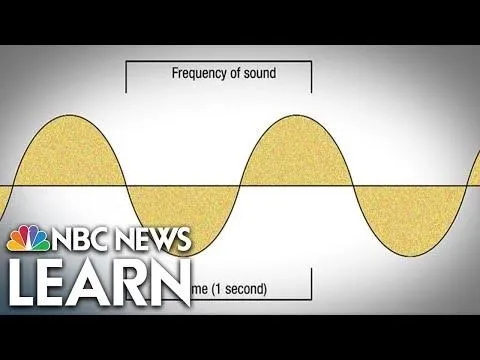
We hear a sound when vibrations in the air hit our ear drum. Our incredible brain then decodes the vibrations, makes sense of them and then we ‘hear’ a sound. Think about when you hit a drum. You can see the skin of the drum vibrate when you hit it. The vibrations from the top of the drum cause the particles in the air to ripple like a wave. For the wave to travel, it has to go through some kind of matter – like the molecules in a gas. When that wave travels through the air and reaches our eardrum, we call that ripple a soundwave. Sound waves can be long and slow – creating a low sound. When sound waves are fast and short, we hear a high-pitched sound.
Here is a pretty good video explaining how sound works:
Can you hear any sounds in Space?
But what if there is NO AIR – like in space?
We already know that sound is caused by a vibration travelling through some kind of matter like particles in the air. On Earth, there are quintillions of particles per cubic cm (cm3) in our atmosphere – that's a lot of matter available to carry the sound vibration to our ears.
But in Interstellar Space, there are hardly any particles per cubic cm – maybe 0.0001 per cm3. In the deep space between galaxies, there might be only one particle per cubic METRE! Not enough matter to set up a sound wave that’s for sure!
So, in deep dark space you would not be able to hear a thing, even if you yelled really loudly or turned the volume up to 10!
Some places in Space do have more matter so could have sound
There are some places in the Universe where there are more particles per cm3 – like in a nebula. Nebulae contain lots of dust and gas after a star explodes and goes nova. The huge explosion creates a sound wave which moves at supersonic speeds, ploughing into all that gas and dust and creating a shockwave! If we were in the nebula we would most certainly hear (and feel) it!
Here is a beautiful image of Supernova W49B (thanks NASA), showing just how powerful such an explosion might be.
Sonification
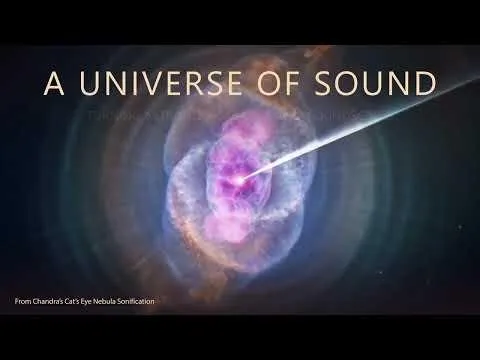
Even though we can’t hear anything from Space, astronomers are starting to convert some astronomical data into sound, through a process called Sonification. Scientists take data from telescopes like Chandra (X-Ray) and the James Webb Telescope and convert the data into wavelengths we can hear. So even though we can’t hear in space, we can ‘hear’ the data coming from Space.
Here is an introduction to sonification, telling us more about how astronomers are doing this and how it can help people (like blind people for example) to learn more about the Universe.
https://www.youtube.com/watch?v=3cRDZWPXsuk&t=136s
The growl of a black hole
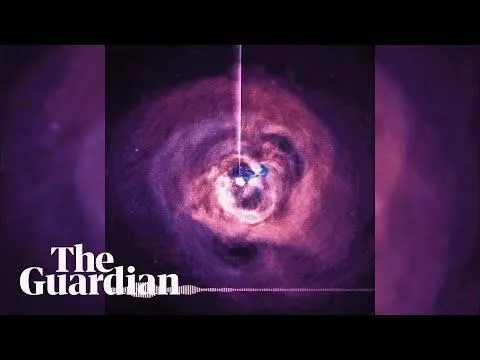
And how about this sonification of a black hole brought to us by NASA!!
SIdewalk Astronomy
5.30pm on Friday 2 May near Discovery Centre
Join the members of the Bendigo Section of the Astronomical Society of Victoria and Discoverers as they bring out their telescopes to look at the night sky.
We might not be able to hear Space, but we can see the moon, planets, star clusters and constellations and even some nebulae.
We look forward to peering at the Universe together.
Sign Up To Our Mailing List