Another question almost everyone asks is:
'How was life made?'
In Blog number 5, we learned that Earth was formed around 4.5 billion years ago. In Earth’s early days, it was getting smashed regularly by asteroids and was covered in erupting volcanos. It was a hot and dangerous place. Here is an artist’s depiction of what the early Hadean Earth might have looked like.
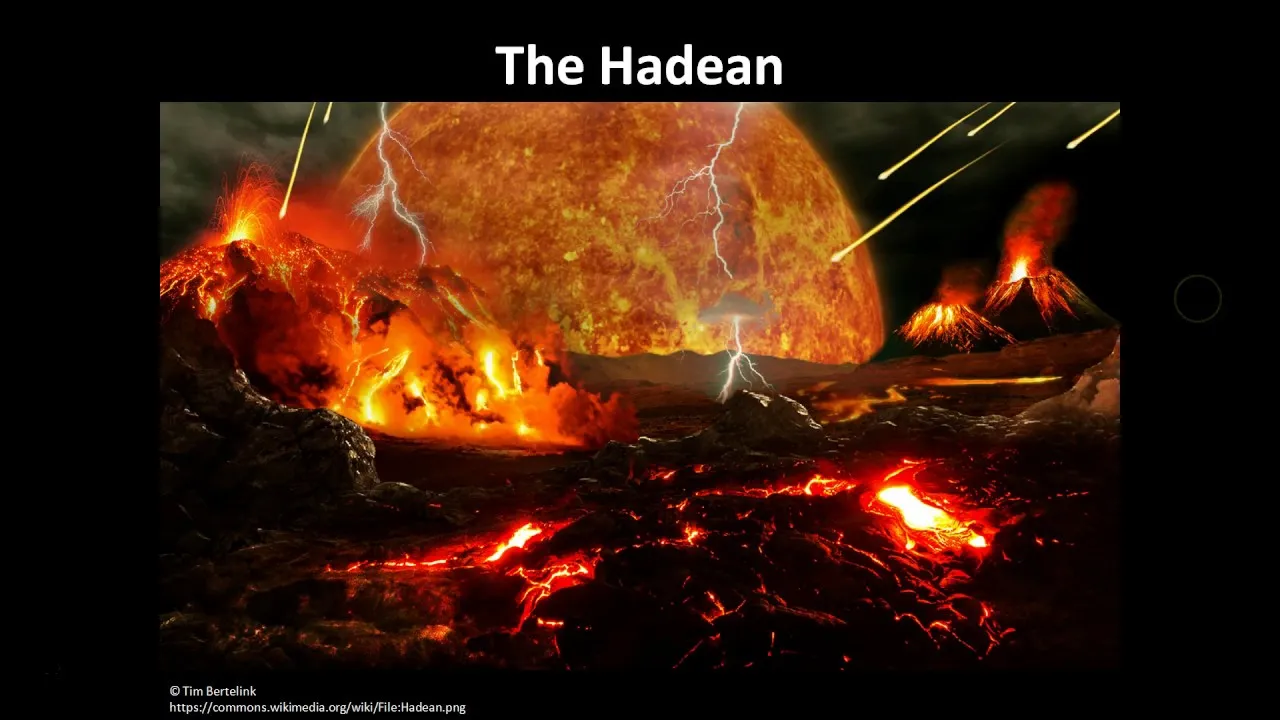
How could life possibly have gained a foothold under those conditions?
Imagine an Earth where there was an atmosphere composed of carbon dioxide instead of the oxygen we need to breathe. Where despite the heat and lava, water covered the planet. And when 1 day was only about 12 hours long because Earth was spinning much faster than it is now.
Scientists thought that the first signs of life emerged around 3.8 billion years ago, when Earth was 0.7 billion years old. But some recent research from Bristol University has suggested that the first life-forms lived about 4.2 billion years ago – quite a bit earlier than we thought. In fact, life got going on Earth very quickly despite all the mayhem going on.
Life under extreme conditions.
There are no fossils we can study from the Haldean Era, so scientists are trying to figure out what the very first life forms might have been like. We know that there are some creatures that can live in environments like that of Hadean Earth – such as in the hydrothermal vents deep under the sea where very hot water shoots out from fissures in the sea bed. These superhero life-forms are called extremophiles. They can cope with extreme temperatures, little or no oxygen, high doses of radiation, high levels of salts and crushing levels of pressure like at the bottom of the sea. Extremophiles can live in places where we would not be able to survive without some pretty serious technology to protect us.
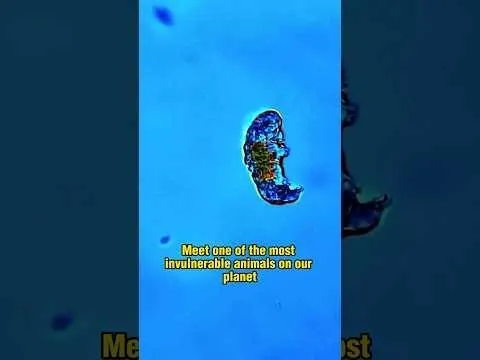
The hardy little tardigrade is an example of an extremophile which can survive such terrible environments – even in space (for short periods!)
Scientists are on the hunt to find the very first example of life on Earth. They call this first ancestor, LUCA or the Last Universal Common Ancestor – the first form of life from which plants, animals, fungi, bacteria, viruses and microbes evolved from. We will let you know when they are successful!
What ingredients do you need for life to begin?
We don’t yet know exactly how life started but we do know some of the things that need to be in the life-making cupboard
Life’s Essentials
1. Energy
Just as you need electricity to power the stove, there needs to be a stead energy source for life to get going. Our Sun provides lots of energy on the surface of the Earth while geothermal energy from the Earth’s core provides energy on the ocean floor.
2. Chemical elements
Life as we know it also depends on the presence of elements like carbon, hydrogen, oxygen, nitrogen and phosphorous. These elements are present on Earth but we also know that organic compounds made from carbon are essential building blocks for life and they have been found in meteors. Some of these compounds may be present on other planets or moons as well.
3. Liquid
We need water on earth to help carry elements and compounds around as well as provide us with rain. But it is possible that liquid methane, such as on Saturn’s moon Titan, could be used to get other forms of life going.
How did life get started?
There are a few theories about how life got going:
But exactly how life began from inanimate material,we still don’t really know and can’t explain. Keep on asking that question!
Look up!
Space exploration missions are now looking for signs of life on other planets and moons in the Solar System. There is still hope that we might find ancient evidence of life on Mars while missions to Europa and Titan are planned to see if any of the essential building blocks of life, like organic compounds, might be present there.
Sidewalk Astronomy Friday 7 February
You can look through the telescopes on Friday 7 February to see if you can spot some of Jupiter’s moons which are soon to be explored for signs of life.
Members of the Astronomical Society of Victoria will set up their telescopes outside the Discovery Centre at around 8.30pm on Friday.
Everyone is welcome – gold coin donation appreciated.
Share
Sign Up To Our Mailing List