International Asteroid Day
In the 1998 movie ‘Armageddon’, Bruce Willis was sent into space to save Earth from an asteroid heading straight for us. He saved us of course, but we do have some actual reasons to worry about this happening, after all, the dinosaurs went extinct after a large asteroid hit the Earth and wiped out most living creatures. But asteroids can also teach us a lot, about the history of the Solar System for example.
June 30 is International Asteroid Day.
World Asteroid Day was officially sanctioned by the United Nations in 2016. It was established by a group of scientists, filmmakers, and astrophysicists. On the 30th June in 1908, the largest asteroid impact in recent history was recorded in Russia – the Siberia Tunguska event – causing an explosion more powerful than the atom bomb dropped on Hiroshima in 1945. The asteroid blast killed hundreds of reindeer and millions of trees. Luckily, the asteroid hit Earth in a very remote region, so there were no recorded human fatalities. International Asteroid Day commemorates this event and hopes to raise awareness of asteroids, their dangers and their possible benefits to humankind.
What is an Asteroid?
We know that the Solar System was a very dramatic and violent place when it was first forming. Dust, ice and gases formed little pebbles which joined together into larger rocky objects. These objects crashed into others, either joining up to form planetesimals or breaking up into smaller chunks. Asteroids are leftovers from the wild, early Solar System.
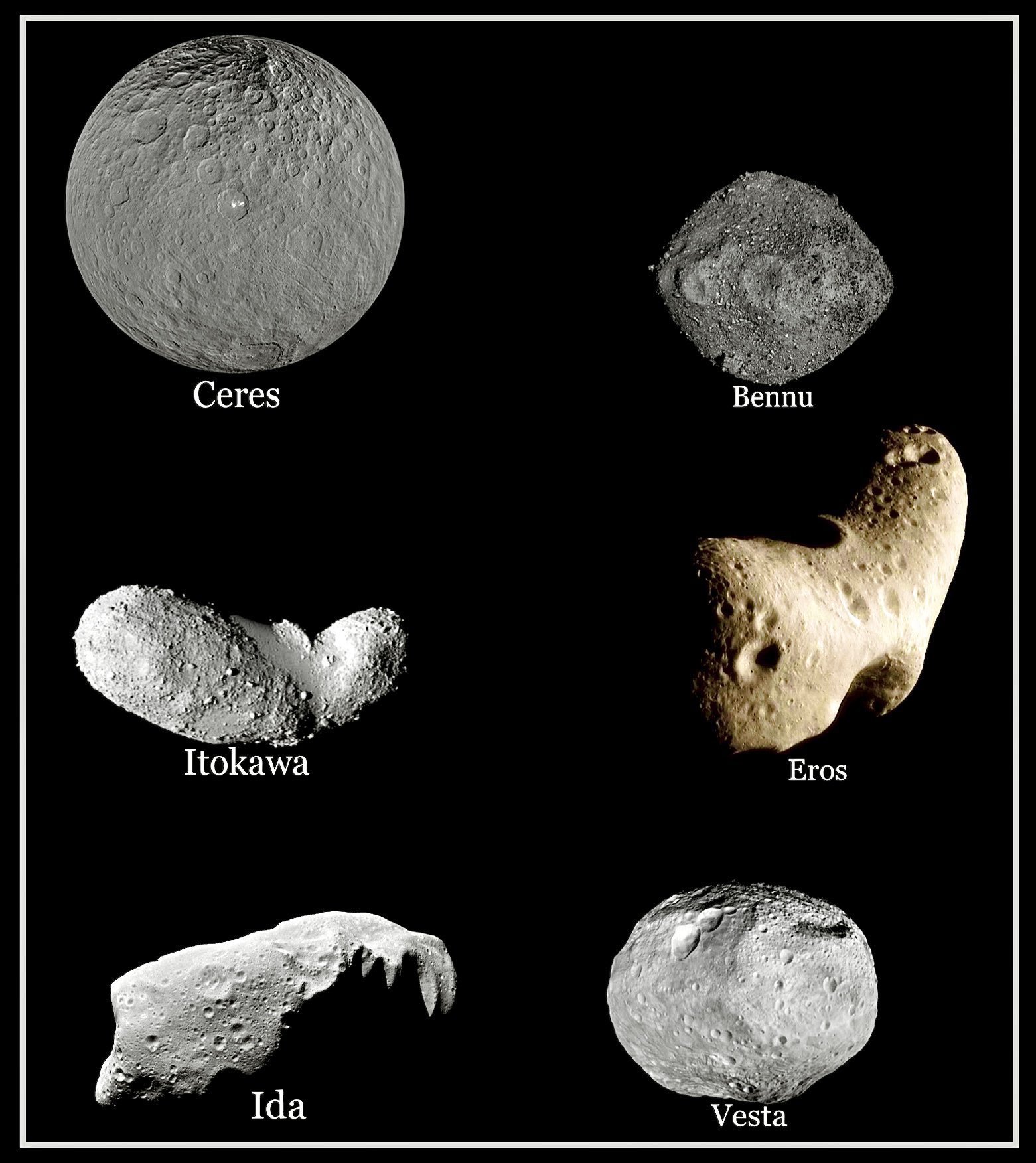
Asteroids vary in size and shape and are mostly made of rock or metal. You can see some of the different asteroids in the image here. Some of them look like potatoes, don’t they?
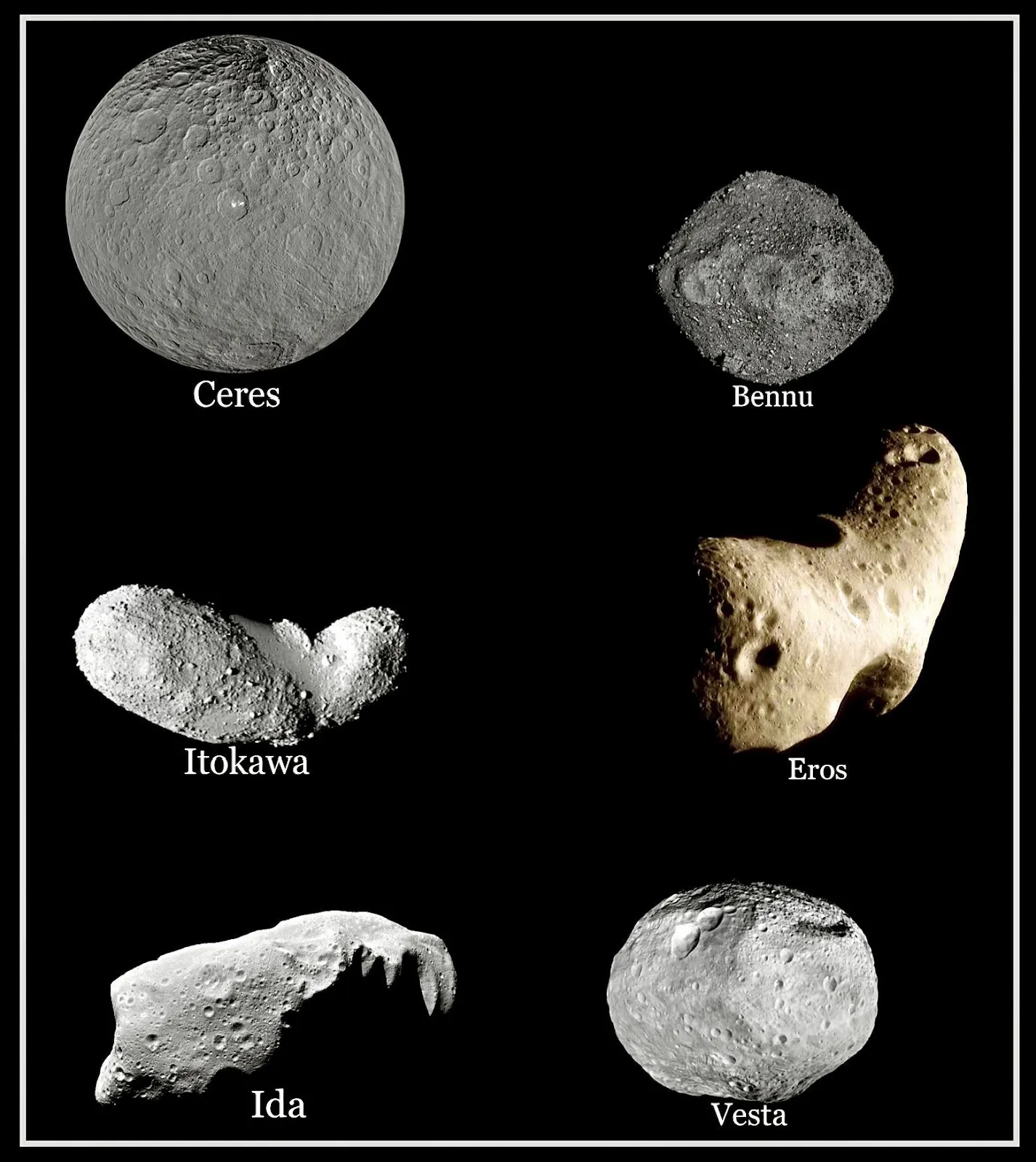
Diagram from: https://pbs.twimg.com/media/F0qqznGWIAEf5pF.jpg:large
C-type asteroids are dark, non-reflective and mostly made of rocky carbon-based material. C-types are the most common, accounting for around 75% of all asteroids. S-type asteroids are usually green or reddish, stony and contain silicon and nickel iron. M-type are metallic, containing mostly iron and nickel. An E-type asteroid is highly reflective and is composed mostly of a mineral called enstatite (or magnesium silicate). Hydrogen has been found in this material, leading scientists to wonder, and argue about, whether asteroids could have helped to deliver the compounds necessary to make Earth’s water.
When were Asteroids discovered?
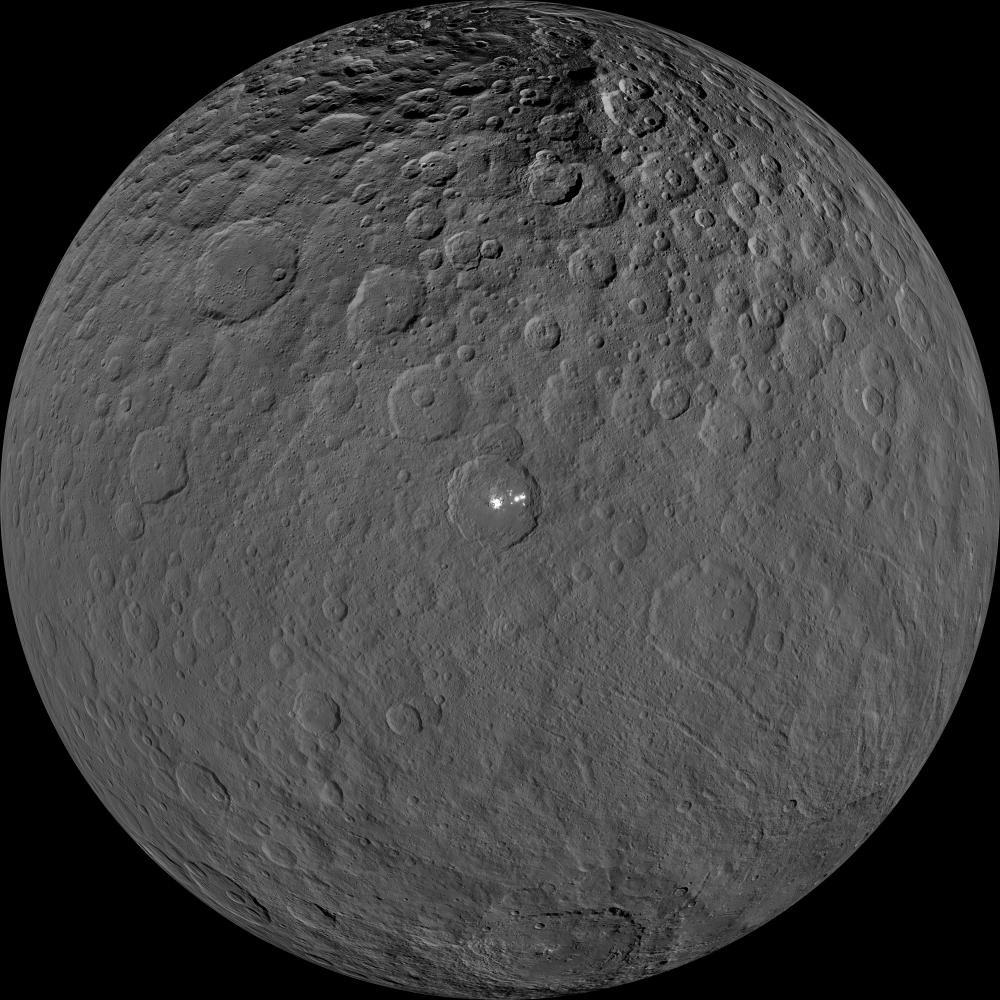
The first asteroid to be identified was Ceres which was discovered by Guiseppe Piazzi in 1801. NASA’s Dawn mission captured this shot of Ceres in 2018.
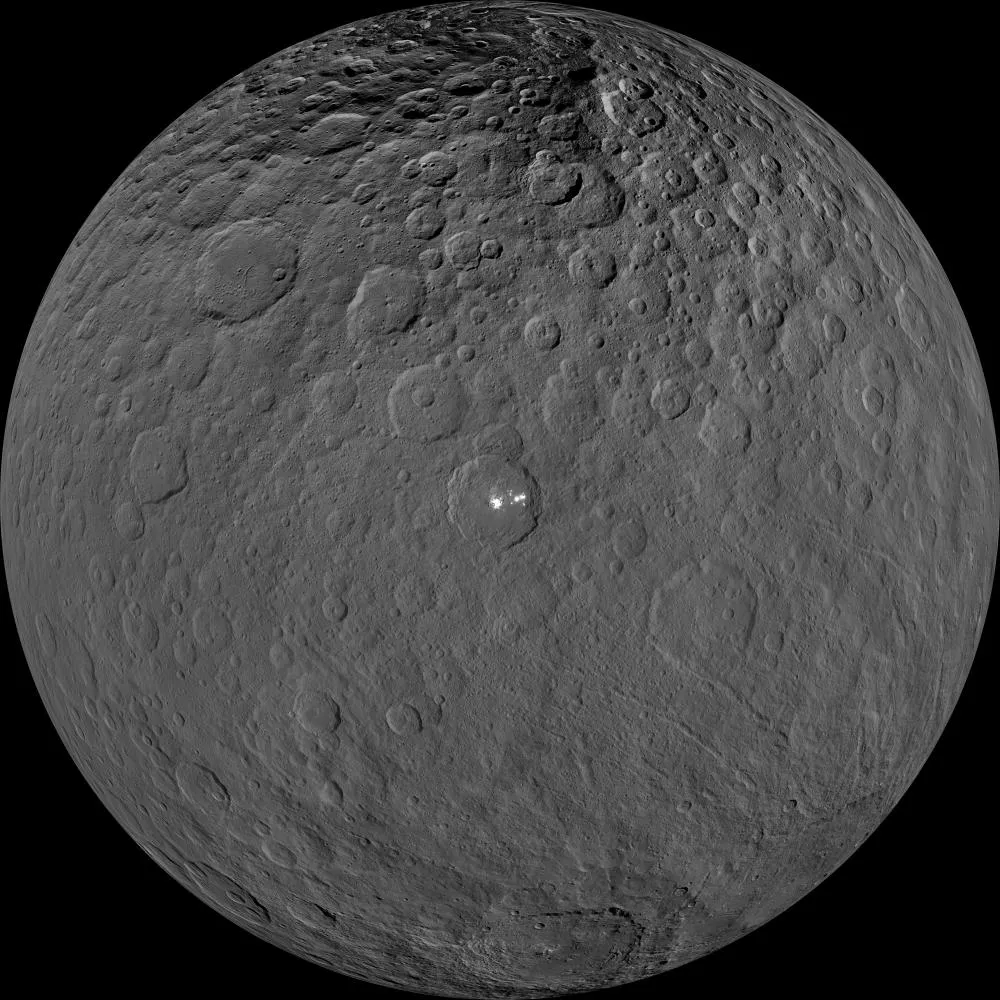
https://photojournal.jpl.nasa.gov/jpegMod/PIA21906_modest.jpg
Source: NASA/Dawn
Ceres is a very large asteroid, so big that it is now called a dwarf planet.
Space Missions
There have been a number of space missions launched to find out more about asteroids.
The first spacecraft to land on an asteroid was NASA’s NEAR Shoemaker, which reached asteroid Eros in 2001, spending a few weeks on the surface. In 2005, the Japanese spacecraft, Hayabusa, landed on asteroid Itokawa, while in 2019, a follow up mission, Hayabusa 2, landed on asteroid Ryugu. Both returned samples to Earth. Earlier this year, NASA’s OSIRIS-REx mission returned from space with a sample from asteroid Bennu. These samples revealed minerals only formed when water evaporates and carbon-based compounds which are essential building blocks for life. Exciting!
How many asteroids are there?
Latest estimations suggest that there are over 1 million asteroids of varying sizes in the Solar System. Most of them are irregular in shape rather than round like Ceres.
The Vera Rubin Observatory released its first images on June 23rd 2025. Over 2014 new asteroids were detected in the first release of data. It is expected that Rubin will discover many millions more asteroids over its 10-year mission.
Here is a video released by the Rubin Observatory showing some of the new asteroids they spotted.
https://www.youtube.com/watch?v=DTuq-vBsDJE&t=66s
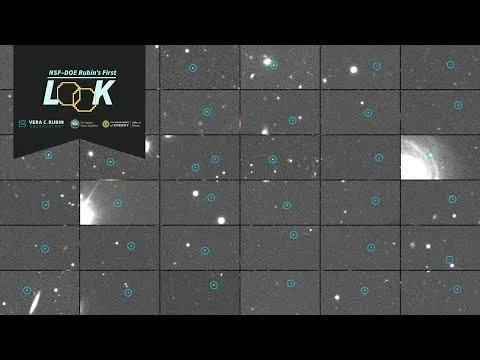
Source: Vera Rubin Observatory
Where do Asteroids hang out?
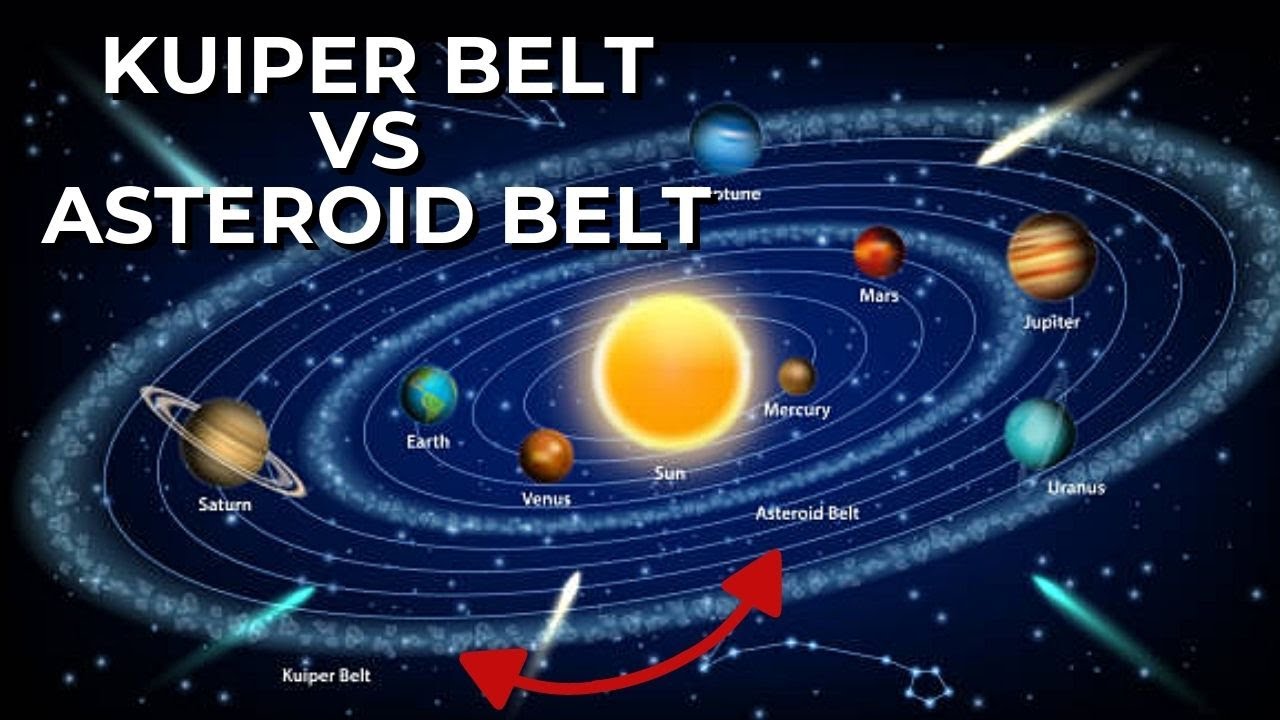
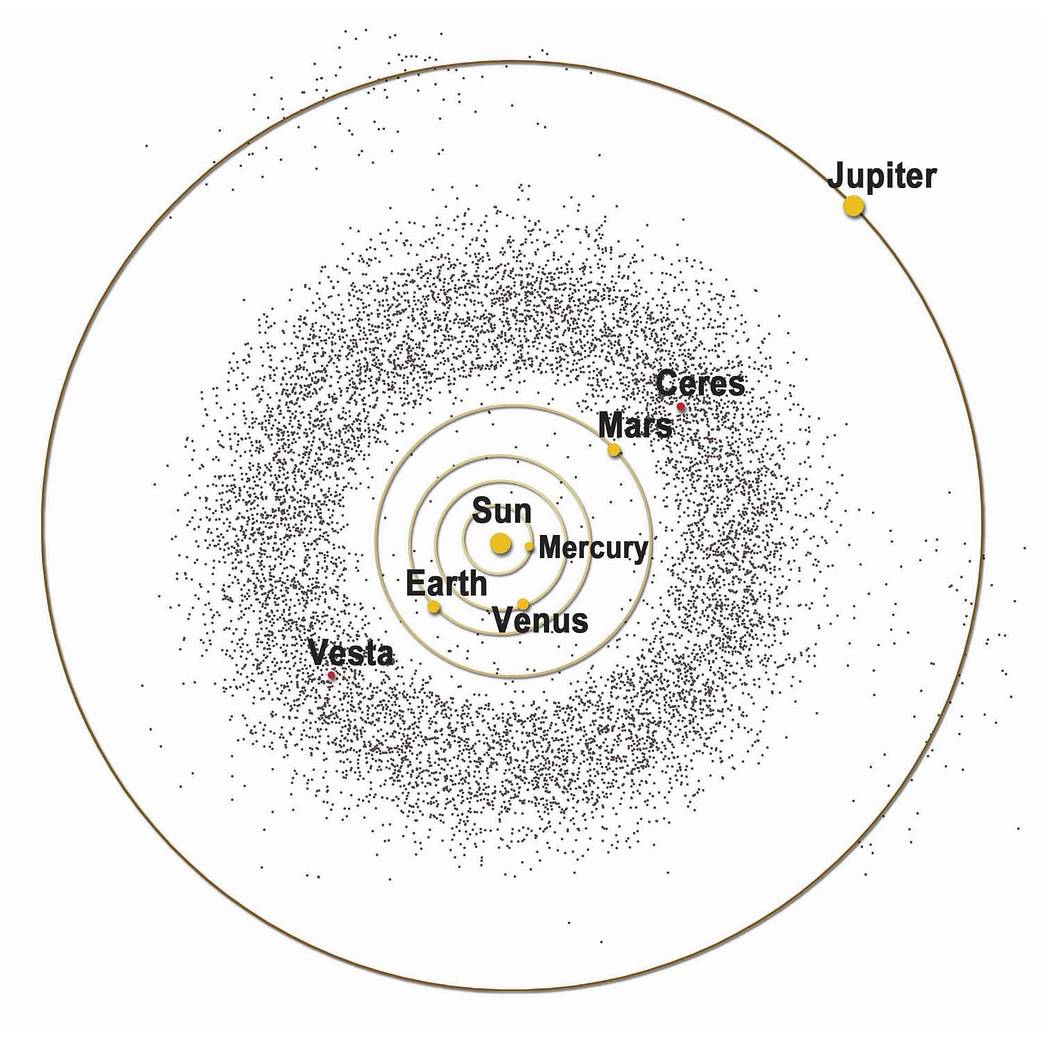
Most Asteroids we know about are located in the Asteroid Belt which is in between Mars and Jupiter. Jupiter with its strong gravity has kept most of the asteroids in the belt, though some do escape and head towards the Sun. There are also many asteroids in the Kuiper Belt – way out past Neptune. Most comets come from even further out in the Oort Cloud. This illustration gives you an idea of where the Asteroid and Kuiper Belts are in the Solar System. The comets are heading in towards the Sun from the Oort Cloud!
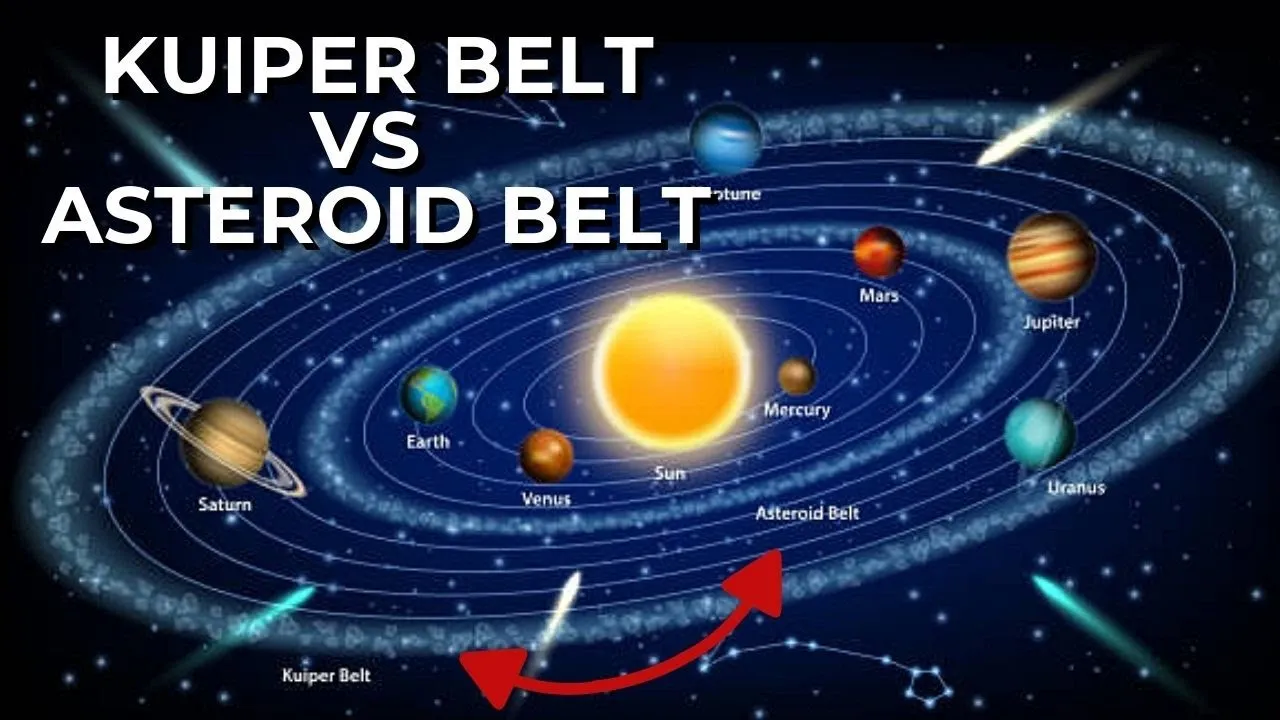
Diagram from: https://i.ytimg.com/vi/dCCRiL9vkaM/maxresdefault.jpg
Could an Asteroid hit the Earth?
When they are in our vicinity, they are identified as Near Earth Objects, or NEO’s. These NEO’s are closely monitored by NASA, the European Space Organisation (ESO) and other space agencies around the world – just in case. It is wise to be prepared.
There was some concern expressed earlier this year about asteroid 2024 YR4, which is on a path towards Earth and could come very close to us in 2032. The risk has since been downgraded to very unlikely (0.001%), although there remains a low possibility (1.7%) that it could hit the Moon.
You can find out how NASA keeps an eye on these objects through Asteroid Watch in this video.
https://www.youtube.com/watch?v=53Js-_vo3mo&t=26s
Source: NASA JPL Asteroid Watch
Did You Know?
Look Up!
We probably won’t be able to see an asteroid at this time of the year, but if you head to the carpark near Discovery on Friday Night, 4th July at around 5.30pm, you will be able to see other heavenly objects (weather permitting of course).
Members of the Astronomical Society of Victoria will be setting up their telescopes around 5.30pm. You will be able to look at the Moon, stars and maybe even some deep sky objects like glittering star clusters and awesome nebulae.
Wear a warm jacket!! See you there!
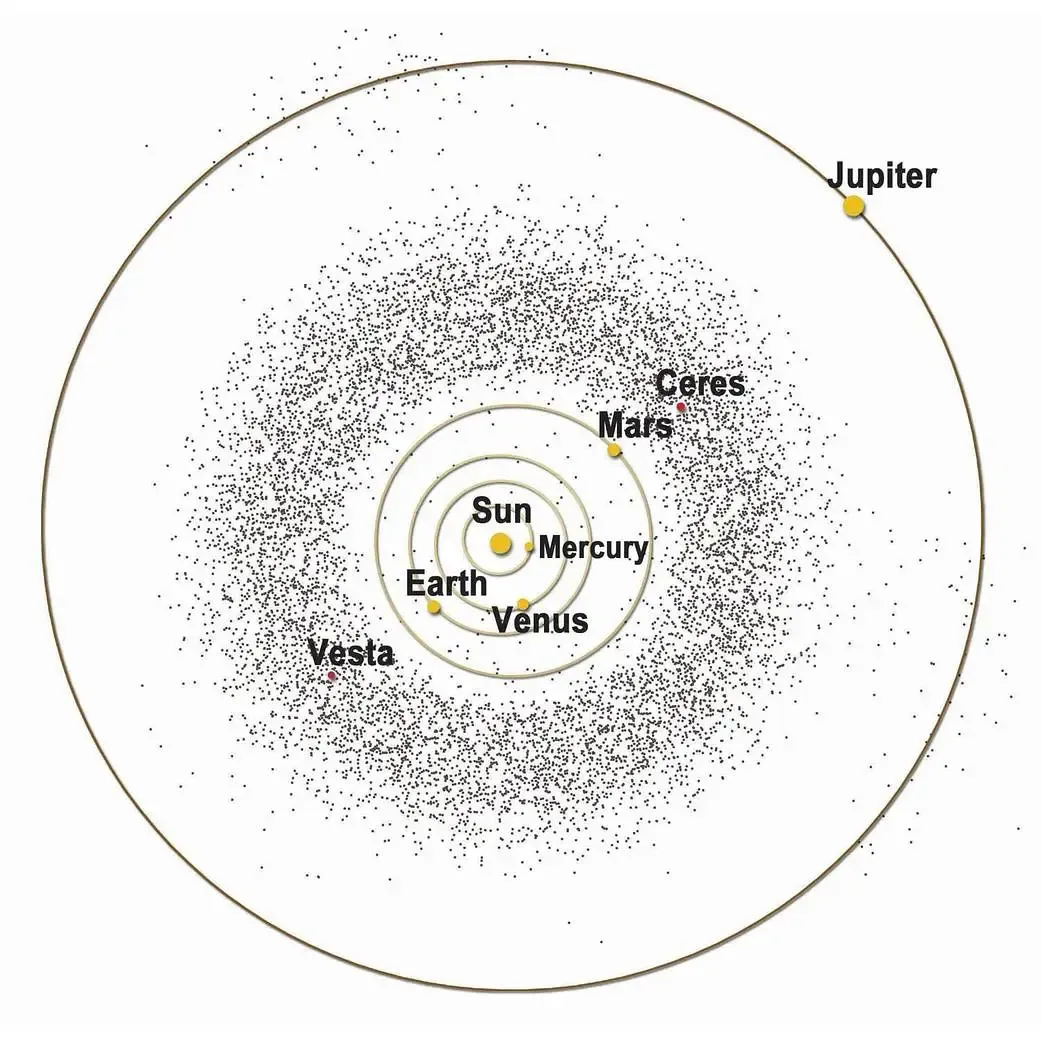
https://www.nasa.gov/wp-content/uploads/2023/03/pia19380.jpeg
Sign Up To Our Mailing List