Nebula Notes
Do you think humans will ever travel into space? Colonise another planet? Travel to another galaxy?
Maybe! The more we can learn about space, stars and planets, the more likely it is that we will find ways to explore the universe.
In this blog, we will lift the lid on the most recent astronomical discoveries. We will join astronomers as they find out more about the big mysteries and wonders out there – like are we alone in the Universe, what is a black hole, can we survive on other worlds, what will happen to our Sun and how can the Universe be expanding?
Let’s start by looking at some recent news from our nearest neighbour in space: Mars –the red planet.
The hunt for water on Mars
Did you get a chance to pop into the Centre over summer for our Science Show which was all about how important water is to life? Meanwhile in the Planetarium, we went on a tour around some of the places in the Solar System where water, and perhaps life itself might exist.
Mars is a good place to start looking – in the early days people thought that there were canals and rivers on the planet. Wouldn’t it be great if we could set up a colony supplied by Martian water!
But have you seen any of the pictures taken by the Curiosity helicopter on Mars? In the photo below, taken last year, you can see that the planet is dry and dusty like a desert. It is also very cold, with an average temperature of around -60o Celsius.
Doesn’t look too hospitable does it!
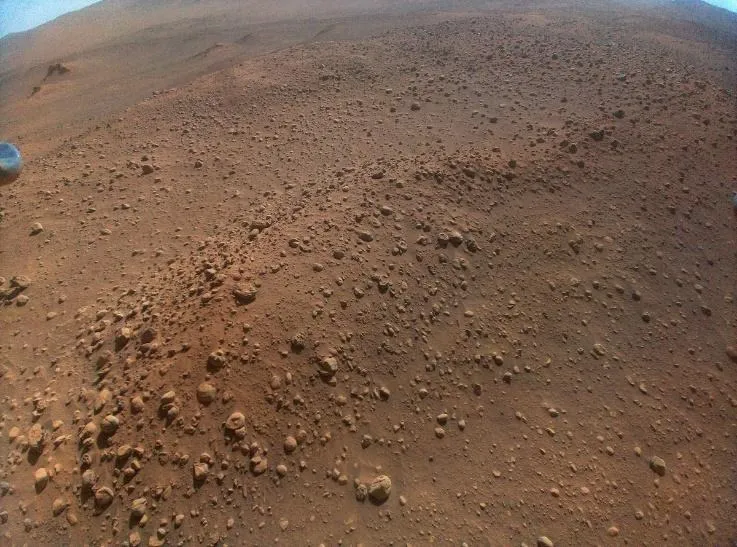
Castell Henllys region of Jezero Crater, Mars, taken by Curiosity on March 21, 2023. Credit: NASA
If people are very going to live on the red planet, they will need water – not just to drink, but to produce the oxygen and hydrogen they will need for fuel and energy. And, of course, if we want to grow our own food on Mars, we will need to water the gardens
We could take some with us – but we would have to build a gigantic spaceship to carry it. Elon Musk is working to build such a ship and he reckons that we will be able to land people on Mars in about 4 years time – well, time will tell!
We have known for a while that there is frozen water at the Martian polar caps -- indeed some research last year suggested that there might even be liquid water under the polar ice (Arnold et al 2022). But building a colony in the polar regions might be a bit uncomfortable with temperatures going as low as -153oC.
So, we are on the look out for water closer to the warmer regions around the equator.
This week, there has been a lot of excitement about the detection of large deposits of ice below the surface at the Medusae Fossae Formation – which is near the equator on Mars. New radar data from Mars Express’s MARSIS suggests that there is a thick layer of dust and ice buried under hundreds of metres of dust and ash.
In the graphic below, you can see the possible ice deposits below the surface near the equator.
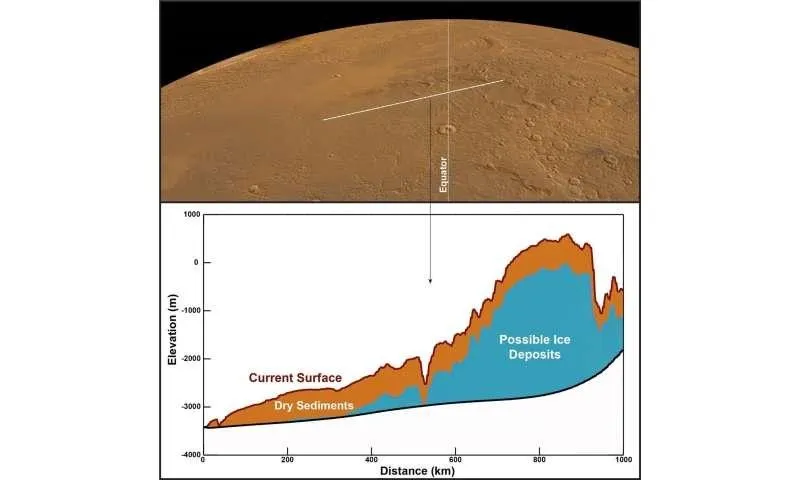
Source: Thomas Watters et al, Evidence of Ice-Rich Layered Deposits in the Medusae Fossae Formation of Mars, Geophysical Research Letters (2024).
The lead author of the research team, Thomas Watters of the Smithsonian Institute, believes there could be enough water in the Medusae Fussae Formation to form a shallow ocean over the whole planet if it was melted. That’s about as much water as there is in the Red Sea on Earth. Trouble is, it is so far under the dust and rocks that we would have a lot of trouble trying to get at it with our current technology..
The search for water is intensifying as NASA, SpaceX and others work to make a Mars colony a reality. Plans are afoot for an aerial water hunter which could search for precious H2O from high in the planet’s atmosphere. Here is an artist’s depiction of what this NASA project might look like:
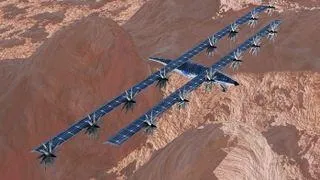
Artist’s depiction of the Mars Aerial and Ground Global Intelligent Explorer (MAGGIE). Image credit: Ge-Cheng Zhai.
We don’t have the technology to get at any of the ice we have found just yet, but it is looking more and more likely that Mars has plenty of water, hiding near the polar caps, near the equator and maybe elsewhere on the planet. Now we just have to figure out how to harvest it.
What do you think? Is a colony on Mars likely? Would you like to make the trip?
If you are excited about the possibility of travel to Mars and want to have a look at the actual planet through a telescope, come along to Sidewalk Astronomy which we run with the Astronomical Society of Victoria every month.
Stay tuned for more news from Nebula Notes.
References
Arnold, N.S., Butcher, F.E.G., Conway, S.J. et al., 2022, Nat Astron 6, 1256–1262
https://doi.org/10.1038/s41550-022-01782-0
Watters, T. et al., 2024, Geophysical Research Letters Jan 18 2024
Sign Up To Our Mailing List