Not everyone calls Earth ‘Earth’!
People who speak English call our planet Earth, but people who don’t speak English use words from their own language. You can find some of the words used by people around the world here: https://www.indifferentlanguages.com/words/earth#google_vignette
Words describe things as we see and understand them – they have meaning to us. We name things to help us remember, talk about and study them. For example, the English word ‘Earth’ comes from the Old English and Germanic words for dirt or soil -- such as erde. In English, the Earth is literally the ground under everyone’s feet.
Many other cultures thought of our planet differently so they used different kinds of words. Some cultures thought of Earth as the ‘mother of life’. For example, in Greek mythology, Earth is called ‘Gaia’, or the goddess of life. In South America, the Incas worshipped the Earth as the goddess, ‘Pachamama’. Many cultures thought of planets and stars as having religious significance – they were ‘heavenly’ in their eyes so their words for Earth often have a spiritual origin. Our first Nations people have many words to describe Earth. They tell many stories about their strong connection to land/Earth and their responsibility as stewards of our planet.
We are still telling new stories about Earth that reflect our changing understanding. Here is a fabulous image taken from NASA’s Lunar Reconnaissance Orbiter (LRO) in 2015 showing our beautiful Earth rising above the Moon. Earth is not just the ground under our feet in this image – don’t you think she is a glorious planet!
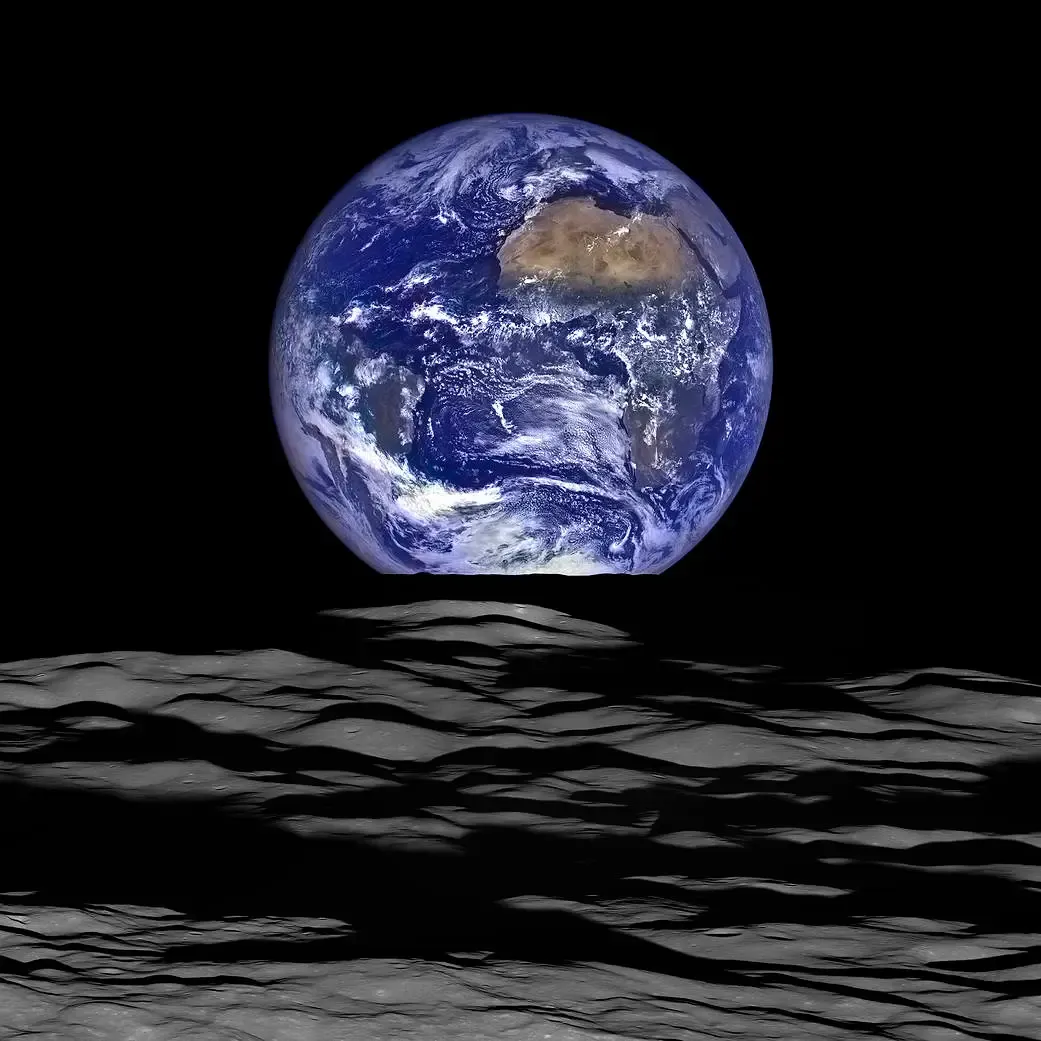
NASA's Lunar Reconnaissance Orbiter captured a unique view of Earth from the spacecraft's vantage point in orbit around the moon. NASA 2015
In western Astronomy, the planets we can see with our own eyes, like Mercury, Venus, Mars Jupiter and Saturn, were given the names of Gods from Greek and Roman mythology. Even the new planets discovered after the invention of telescopes were named in the same way (like Neptune, Uranus and even Pluto).
While Earth is also a planet, our names for Earth are more personal and direct – she is where we live, she sustains and nourishes us and we are connected to her rhythms. Humans had words for Earth before we named other planets. She was right under our feet. Do you think Earth is a good name? Would you change it?
No matter what we call her, Earth is our home world and we have a responsibility to look after her.
Carl Sagan was inspired to write a book called ‘The Pale Blue Dot’ after he saw an image taken, at his suggestion, by Voyager 1 on 14 February 1990. Voyager 1 was about 6.4 billion kms away, further out than Neptune. Look at how tiny our planet looks from the far regions of the Solar System! Can you see the pale blue dot that is our home? How does that image make you think of Earth?
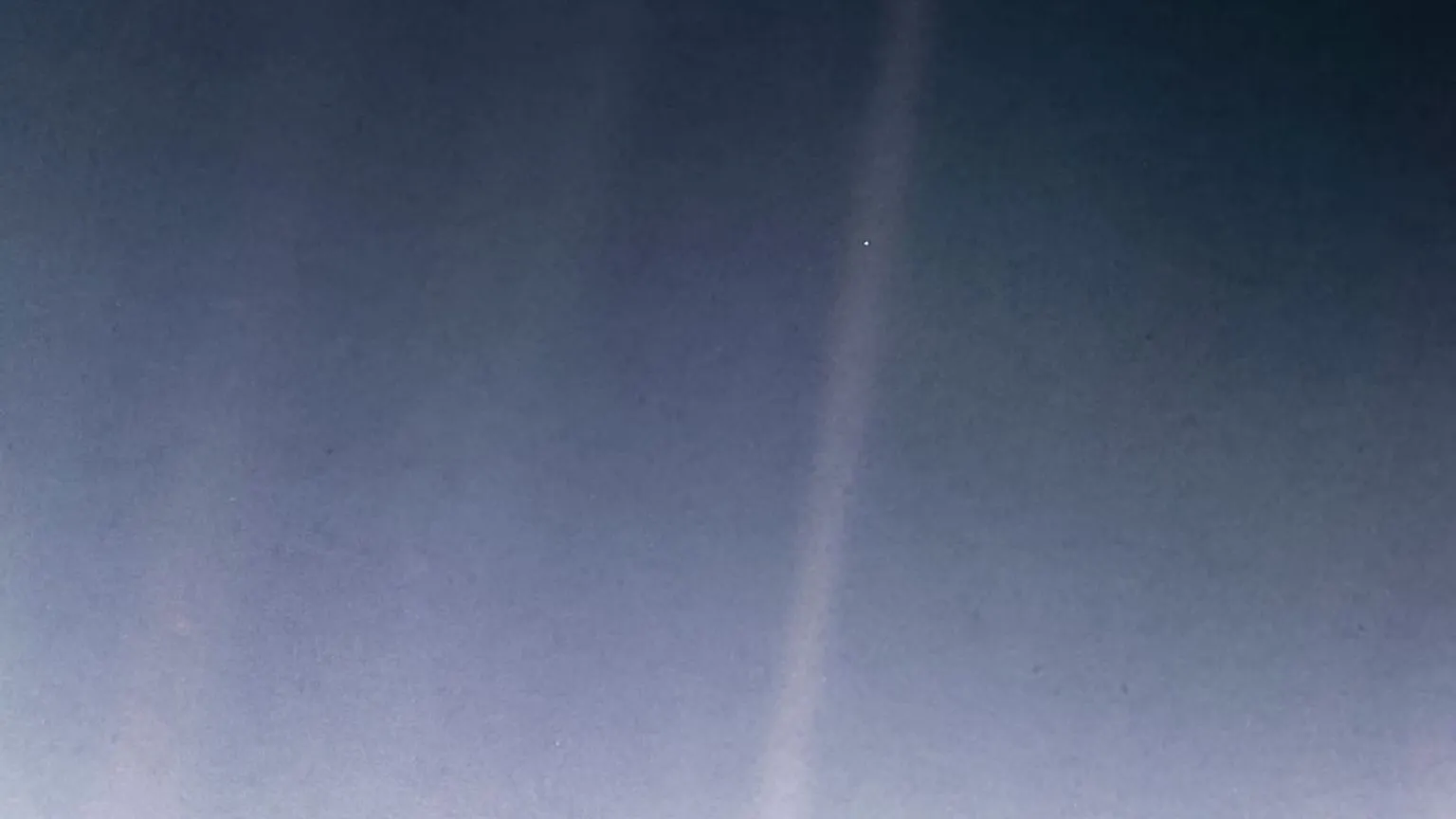
THE PALE BLUE DOT OF EARTH "That's here. That's Home. That's us." Carl Sagan. Image: NASA / JPL
No matter what we call it, Earth is precious.
Planets above!
Come and look at some of the other planets we have talked about through the telescopes with ASV members during Sidewalk Astronomy on Friday 10 January. The telescopes will be set up next to the Discovery Centre around 8.30pm. You should be able to see Venus , Jupiter and Saturn as well as other heavenly objects – weather permitting!
Sign Up To Our Mailing List